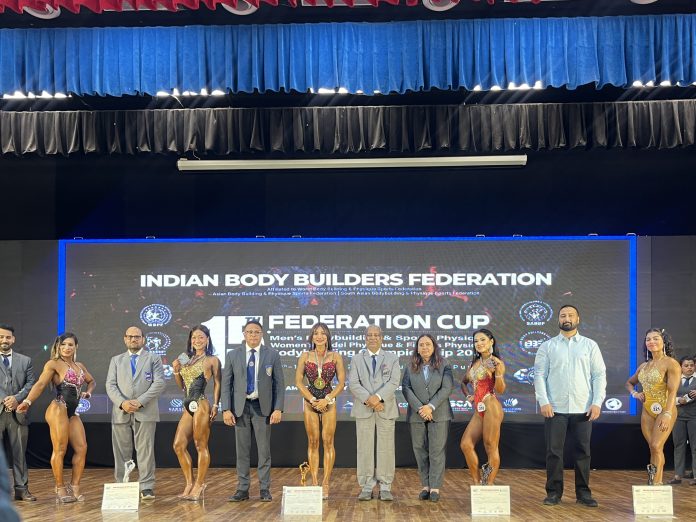
Athletes from the Northeast delivered a remarkable performance at the 15th Federation Cup Men’s Bodybuilding and Sports Physique, Women’s Model Physique and Fitness Physique Championship, securing all five top positions in the Women’s Swimsuit category.
The national championship, organized by the Punjab Amateur Bodybuilding Association, was held in Ludhiana, Punjab, from June 12–13 and witnessed participation from athletes representing states across the country.
Among 20 competitors in the Women’s Swimsuit category, Arpana Gurung of Sikkim emerged victorious to claim the gold medal. Hillang Yajik of Arunachal Pradesh secured the silver medal, while Lily Hashnu of Nagaland finished with the bronze.
Continuing the Northeast’s dominance, Barnali Basumatary of Assam placed fourth, followed by Rita Nag of Tripura in fifth position, completing a clean sweep of the top five rankings for the region.
The two-day championship featured competitions in Men’s Bodybuilding, Sports Physique, Women’s Model Physique, and Fitness Physique categories, attracting some of the country’s finest athletes and showcasing the growing strength of physique sports in India.
The outstanding results further highlight the Northeast’s emergence as a powerhouse in women’s physique and fitness competitions on the national stage
The first-ever Sikkim State Shooting Championship 2026 concluded successfully at the Sikkim Rifle and Pistol Academy, Gangtok, with 12 shooters earning qualification for the upcoming North East Zone Championship and Pre-National Shooting Championship.
The two-day championship, organised by the Sikkim Rifle Association (SRA), witnessed the participation of 22 shooters competing in the 10-metre Air Pistol and 10-metre Peep Sight Air Rifle events across multiple categories. The event marked a significant milestone in the development of shooting sports in the state and served as the official qualifying competition for higher-level championships.
The closing ceremony was attended by Minister for Health and Family Welfare, Mr G.T. Dhungel, as the chief guest, while Tadong Ward Councillor Mr Sonam Pintso Bhutia graced the occasion as the guest of honour.
Addressing the gathering, Mr Dhungel congratulated the SRA for successfully organising the inaugural championship and described it as a major step toward diversifying Sikkim’s sporting landscape. Reiterating the vision of Chief Minister Mr Prem Singh Tamang to promote sports, creativity and youth development, he emphasised the government’s commitment to creating opportunities for young people to pursue their talents and aspirations.
Encouraging youth participation in sports, the Minister urged young athletes to pursue their passions with dedication and sincerity, stressing that success comes through perseverance, hard work and commitment. He also called upon parents to actively support their children’s interests and ambitions.
Expressing appreciation to the organisers, Mr Dhungel thanked SRA President Mr Sanjay Budhathoki and his team for laying a strong foundation for the growth of shooting sports in Sikkim. Describing the championship as the beginning of a larger journey, he assured continued government support and urged the National Rifle Association of India (NRAI) to continue guiding and assisting the association in nurturing local shooting talent.
Earlier during the championship, Chairman of the State Sports Development Board (SSDB), Mr Rinzing Wangyal Chopel, attended as chief guest, while President of the Sikkim Olympic Association (SOA), Mr C. Zangpo Bhutia, was the guest of honour.
Speaking on the occasion, Mr Chopel congratulated the SRA for organising the state’s first shooting championship and reiterated the government’s commitment to sports development and the vision of a Nasha Mukt Rajya. He highlighted the role of sports in positively engaging youth and assured every possible support for the future growth of shooting sports in Sikkim.
Mr Chopel further stated that, as the first Chairman of the SSDB, he viewed himself as a bridge between sportspersons and the government and would continue working to facilitate the development of emerging sporting disciplines.
In his address, Mr Bhutia noted that shooting demands exceptional discipline, concentration, physical preparedness and mental endurance. He commended the SRA for successfully conducting the championship within a short period of its establishment.
A ceremonial shooting demonstration by dignitaries and guests added to the significance of the occasion.
Championship Highlights
The championship featured competitions in the 10-metre Air Pistol and 10-metre Peep Sight Air Rifle categories, covering divisions such as Sub-Youth Men, Youth Women, Senior Men, Senior Women, Master Men and Senior Master Women.
Each participant fired 40 shots, with a maximum possible score of 400 points. Scoring was based on a ten-point scale for each shot according to its proximity to the bull’s-eye.
The competition was officiated by NRAI Technical Officials Ms Anjali Singh and Mr John Thounaojam, while Ms Balari Shisha Rani of the Shooting Association of Meghalaya supervised timing, scoring and results.
Results
10m Air Pistol
Sub-Youth Men Individual
Gold: Tarun Bhujel
Youth Women Individual
Gold: Susmita Tamang
Men Individual
Gold: Sherpa Palden Sherpa
Silver: Sashank Thapa
Bronze: Rakesh Rai
Women Individual
Gold: Anu Chettri
Silver: Ishnuka Rai
Bronze: Sriya Chettri
Master Men Individual
Gold: Moses Rai
Silver: Laxuman Adhikari
Senior Master Women Individual
Gold: Sushma Tripathi Bhattarai
10m Air Rifle
Men Individual
Gold: Kishun S. Rajput
Silver: Prabin Tamang
Bronze: Tempa Tshering Sherpa
Women Individual
Gold: Tshering Yangden Bhutia
Silver: Dipuns Tamang
Bronze: Divya Nepal
Master Men Individual
Gold: Ashok Gurung
Qualified Shooters
Based on their performances, the following 12 shooters have qualified to represent Sikkim at the forthcoming North East Zone Championship and Pre-National Shooting Championship:
Tarun Bhujel
Susmita Tamang
Anu Chettri
Ishnuka Rai
Sriya Chettri
Prabina Gurung
Moses Rai
Laxuman Adhikari
Kishun S. Rajput
Prabin Tamang
Tshering Yangden Bhutia
Dipuna Tamang
Growing Shooting Culture in Sikkim
Established in 2024 under the leadership of President Mr Sanjay Budhathoki, the Sikkim Rifle Association is affiliated with the NRAI and aims to build a vibrant shooting sports culture in the state. The association currently operates Sikkim’s first fully equipped indoor shooting facility and has registered 92 members ranging from 9 to 64 years of age.
Notably, the inaugural championship saw the participation of 22 shooters, including 14 women athletes, highlighting the growing popularity of the sport and the encouraging involvement of women in shooting disciplines across the state.
SICA Academy registered their second consecutive victory in the SICA Women’s Club Tournament (Elite Division), edging defending champions Aakraman Sporting Club by nine runs in a thrilling last-over encounter.
After being asked to bat first, SICA Academy posted a competitive 125 for 4 in their allotted 20 overs. The innings was anchored by an outstanding unbeaten 80 from Priyanka Kurmi, who earned the Player of the Match award for her match-winning performance. Namreeta Rai provided valuable support at the other end, remaining not out on 21 as the pair guided their side to a strong total.
In reply, Aakraman Sporting Club mounted a determined chase but fell short at 116 for 7. Diki Lhamu Bhutia top-scored with 29 runs, keeping her team in contention until the closing stages. However, SICA Academy held their nerve in the final overs to seal a memorable victory.
Kurmi capped a superb all-round display by starring with the ball as well, claiming 2 wickets for 15 runs from her four overs to play a key role in restricting the defending champions.
In another Day 4 fixture, Pakyong XI continued their impressive run in the tournament, moving to the top of Group B with an emphatic eight-wicket victory over Denzong Girls Cricket Club.
Chasing a target of 93, opener Aakriti Sharma remained unbeaten on 36 and played a pivotal role in the successful run chase. She was involved in two crucial 45-run partnerships, first combining with captain Nandika Kumari, who scored 30, before adding another unbeaten stand of 45 runs with Echya Rai.
Pakyong XI comfortably reached the target with only two wickets down, maintaining their unbeaten record and strengthening their position at the summit of Group B.
The Summer Slam 3×3 Championship 2026, organised by Team Badass (Bagang Yapa Basketball Club), got underway at NERIST with a strong turnout from basketball enthusiasts across Arunachal Pradesh.
A total of 16 teams, comprising around 64 players, took part in the tournament, competing under FIBA 3×3 rules across a day of intense, high-energy matches.
The event reflects Team Badass’s continued commitment to promoting basketball in the state, as one of Arunachal Pradesh’s oldest and most respected basketball clubs.
With the preliminary rounds completed, the championship moved into its final day, where teams competed for the title, cash prizes and trophies.
Chhinga Veng Spikers staged a sensational comeback to defeat Tuichangral 3-2 and capture their maiden Mizoram Rural Bank (MRB) Pro Volleyball League 2026 women’s title at LPS Arena, Falkland, Aizawl, ending Luangmual’s three-year reign as champions.
In a dramatic final played on Friday night, Chhinga Veng recovered from a two-sets-to-one deficit to secure a memorable 25-19, 18-25, 21-25, 25-23, 15-9 victory and end Luangmual’s three-year dominance in the competition.
The championship triumph was powered by a sensational performance from Elisian Medai, who scored 35 points while committing only six errors. Her match-winning display earned her the Kuriz Player of the Match award. Kerala recruit Anusree Poyili also played a pivotal role, contributing 34 points despite battling illness in the days leading up to the final.
Chhinga Veng made an impressive start to the contest as Elisian, Anusree, Chinglunkimi, setter Lalkhumtiri Renthlei and Lalbiakngheti combined effectively to take the opening set 25-19.
However, Tuichangral responded strongly in the next two sets. Led by Remlalnghaki and Indian international Shaalini Saravanan, they seized control of the match by winning the second and third sets 25-18 and 25-21 respectively.
Shaalini delivered one of the finest individual performances of the tournament, amassing an incredible 50 points while committing just seven errors. Her attacking prowess kept Tuichangral in command for much of the final.
The turning point came in the fourth set when Tuichangral held a commanding 23-20 lead and stood just two points away from the championship. Refusing to surrender, Chhinga Veng mounted a spirited comeback. Elisian produced a series of crucial attacks and serves to level the scores at 23-23 before Anusree helped force a decisive fifth set.
With momentum firmly on their side, Chhinga Veng dominated the deciding set. The attacking combination of Elisian and Anusree proved too strong for Tuichangral’s defence as they built an early advantage and maintained control throughout. The eventual 15-9 victory sparked jubilant celebrations among players and supporters as Chhinga Veng secured their first-ever MRB Pro Volleyball League women’s crown.
Despite finishing runners-up, Tuichangral had reasons to celebrate as Shaalini Saravanan was named Haier Best Spiker following an outstanding tournament. She received valuable support in the final from Remlalnghaki, who contributed 14 points.
The title also marked another significant achievement for Chhinga Veng head coach Jesse Lalpianpuia. Having guided Luangmual to the championship in 2024, he became one of the few coaches to win the league with different women’s teams and was subsequently honoured with the Haier Best Coach award.
The final was attended by Aizawl Municipal Corporation Mayor H. Lalremtluanga, who praised the rapid growth of volleyball in Mizoram and announced that volleyball competitions would be included in future editions of the AMC Mayor Cup.
Individual Award Winners
Kuriz Player of the Match: Elisian Medai (Chhinga Veng Spikers)
Haier Best Spiker: Shaalini Saravanan (Tuichangral)
Haier Best Setter: Lalkhumtiri Renthlei (Chhinga Veng Spikers)
Haier Best Receiver: B Tlangmawii Varte (Tuichangral)
Haier Best Coach: Jesse Lalpianpuia (Chhinga Veng Spikers)
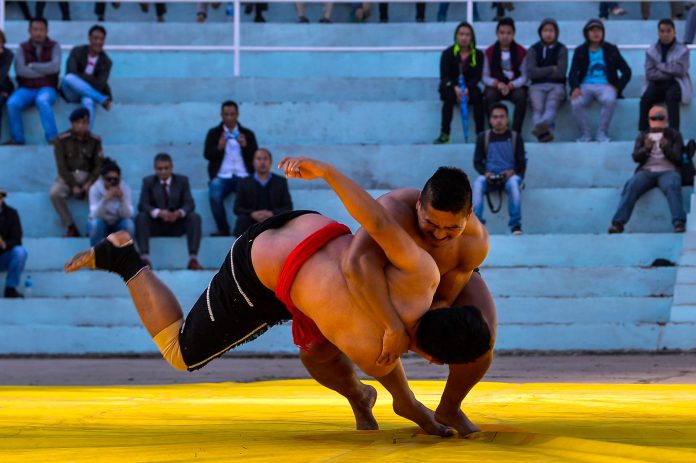
Among the many indigenous sports of Northeast India, few command as much respect and admiration as Naga Wrestling, locally known as Kene. Deeply rooted in the traditions of the Naga people, the sport represents far more than physical competition. It embodies courage, discipline, honor, community pride, and cultural identity.
For centuries, Naga Wrestling has been practiced across villages in present-day Nagaland and neighboring Naga-inhabited regions. What began as a traditional test of strength and skill has evolved into one of India’s most celebrated indigenous sports, attracting thousands of spectators and producing athletes who have become household names throughout the state.
Today, Naga Wrestling stands at the intersection of tradition and modern sport. Major championships offer substantial prize money, attract sponsorships, and draw widespread media attention while preserving customs that have been passed down through generations.
This comprehensive guide explores the origins, rules, techniques, major tournaments, legendary champions, and future of Naga Wrestling.
What is Naga Wrestling?
Naga Wrestling, known locally as Kene, is a traditional grappling sport practiced primarily by the Tenyimia Naga tribes, including the Angami, Chakhesang, Zeliang, Mao, Maram, and Poumai communities.
Unlike Olympic wrestling, freestyle wrestling, or Greco-Roman wrestling, Naga Wrestling begins with both competitors already gripping each other around the waist using a specially tied belt or cloth. From this locked position, wrestlers attempt to throw, lift, trip, or unbalance their opponent.
The objective is simple: force any part of the opponent’s body above the knee to touch the ground.
While the rules appear straightforward, the sport requires exceptional strength, balance, timing, technique, and tactical intelligence.
History and Origins of Naga Wrestling
The origins of Naga Wrestling stretch back centuries and are closely tied to the social and cultural life of Naga communities.
Traditionally, wrestling served multiple purposes. It was a means of physical training, a demonstration of bravery and endurance, and an opportunity for young men to earn respect within their communities. Wrestling contests were frequently organized during village festivals and community gatherings, attracting participants and spectators from neighboring settlements.
The modern competitive format of Naga Wrestling began to emerge during the 1930s and 1940s. Historical accounts suggest that laborers constructing the Kohima-Imphal road organized informal wrestling contests, which gradually developed into more structured competitions.
Recognizing the need to preserve and promote the sport, community leaders established the Nagaland Wrestling Association (NWA) in 1969. Two years later, the first official Naga Wrestling Championship was held in 1971, marking a major milestone in the sport’s history.
Since then, Naga Wrestling has grown into one of the most important sporting traditions in Northeast India.
Rules of Naga Wrestling
Although Naga Wrestling is rooted in tradition, it follows a well-defined set of rules.
Starting Position
Unlike most wrestling disciplines, competitors begin in direct contact.
Each wrestler firmly grips the opponent’s waist belt or waist cloth before the referee signals the start of the bout.
This unique starting position creates immediate engagement and often results in explosive action within seconds.
Objective
A wrestler wins by forcing any part of the opponent’s body above the knee to touch the ground.
This may include:
Back
Shoulder
Chest
Arm
Side of the body
The first wrestler to achieve this successfully wins the round.
Match Format
Most championship matches are conducted in a best-of-three format, with the wrestler winning two rounds declared the victor.
Weight Categories
Traditionally, Naga Wrestling does not rely heavily on weight divisions. Athletes frequently compete against opponents of varying sizes, making technique and leverage just as important as physical strength.
Competition Arena
Historically, matches took place on specially prepared dirt grounds. Today, organized tournaments are held in designated wrestling arenas while retaining traditional elements of the sport.
Techniques and Training
Naga Wrestling is often described as a contest of controlled power.
Because wrestlers start from a locked grip, the ability to generate explosive force becomes crucial.
Common techniques include:
Hip throws
Body lifts
Leg blocks
Rotational throws
Counter-balancing maneuvers
Grip-based leverage attacks
Elite wrestlers spend years developing:
Leg strength
Core stability
Grip power
Balance
Endurance
Explosive acceleration
Many athletes continue to train using traditional methods alongside modern strength and conditioning programs.
Cultural Significance of Naga Wrestling
To understand Naga Wrestling, one must look beyond the competition itself. For the Naga people, wrestling represents identity, heritage, and collective pride. Victorious wrestlers are celebrated not only as athletes but also as ambassadors of their communities. Entire villages often rally behind local competitors during major championships.
The sport preserves values that have long been central to Naga society:
Courage
Discipline
Respect
Resilience
Community spirit
At a time when many traditional practices around the world face decline, Naga Wrestling remains a living expression of indigenous culture.
Major Naga Wrestling Competitions: NWA Naga Traditional Wrestling Championship
The NWA Championship is the premier traditional wrestling event in Nagaland. Organized by the Nagaland Wrestling Association, it features the state’s best wrestlers selected through regional competitions and association qualifiers. The championship is regarded as the highest honor in Naga Wrestling and has produced many legendary champions.
Hornbill International Naga Wrestling Championship
Held annually during the renowned Hornbill Festival, the Hornbill International Naga Wrestling Championship has become one of the most prestigious indigenous sporting events in Northeast India.
The tournament attracts competitors from multiple tribal communities and occasionally welcomes international belt wrestlers, giving the championship a unique global dimension.
30th NWA Naga Traditional Wrestling Championship (2026)
The 30th edition of the NWA Naga Traditional Wrestling Championship was held in March 2026 at the Kohima Local Ground.
The event brought together elite wrestlers representing:
Angami Sports Association
Chakhesang Wrestling Association
Zeliangrong regional associations
Thousands of spectators gathered to witness the state’s finest wrestlers compete for the coveted championship title.
Kezhaseluo-o Pienyü celebrates after winning the 30th NWA Naga Traditional Wrestling Championship in Kohima, Nagaland.
Kezhaseluo-o Pienyü successfully defended his title, further strengthening his reputation as the dominant wrestler of his generation. He received a cash prize of ₹6 lakh along with a 10,000-square-foot plot of land in Chümoukedima.
Third Place: Venuzo Dawhuo (Chakhesang Wrestling Association) – ₹2 lakh
Fourth Place: Venu Vadeo (Chakhesang Wrestling Association) – ₹1.5 lakh
Group Champion
The Chakhesang Wrestling Association emerged as the overall Group Champion.
18th Hornbill International Naga Wrestling Championship (2025)
Held during the Hornbill Festival in December 2025, the championship once again showcased the best of traditional Naga Wrestling.
Open Category
Champion: Kezhaseluo-o Pienyü (Angami)
The victory marked his third career Hornbill International title, further cementing his legacy in the sport.
Runner-Up: Thuputha Hesuh (Chakhesang)
90 kg and Below Category
Champion: Kevizhakho Suokhrie
Provisional Category
Champion: Sentilong Imchen
Women’s Category
Champion: Vizoseno Kiso
The women’s division continues to grow in prominence and reflects the increasing participation of female athletes in traditional Naga sports.
Recent Champions of Naga Wrestling
The past few years have produced some of the most competitive wrestling contests in the sport’s history.
Major Championship Winners
Year
Tournament
Champion
2026
NWA State Championship
Kezhaseluo-o Pienyü
2025
Hornbill International Championship
Kezhaseluo-o Pienyü
2024
NWA State Championship
Kezhaseluo-o Pienyü
2024
Hornbill International Championship
Venuzo Dawhuo
2023
Hornbill International Championship
Kadyr Kelsinbekov (Kyrgyzstan)
2022
NWA State Championship
Venuzo Dawhuo
These results highlight the emergence of a new generation of champions while also demonstrating the growing international appeal of the sport.
The Rise of Kezhaseluo-o Pienyü
In contemporary Naga Wrestling, no athlete has achieved greater success than Kezhaseluo-o Pienyü.
His victories at both the NWA Championship and the Hornbill International Championship have established him as one of the most accomplished wrestlers in recent history.
By winning the 2024 and 2026 NWA Championships and securing his third Hornbill International title in 2025, he has become the defining figure of modern Naga Wrestling.
His success reflects not only exceptional athletic ability but also the continued strength of the traditional wrestling system in Nagaland.
Economic Impact and Prize Money
Naga Wrestling has become one of the highest-profile indigenous sports in Northeast India. Modern championships offer significant financial rewards, sponsorship opportunities, and public recognition. The 2026 NWA Championship distributed substantial prize money, while the champion also received valuable land as part of the reward package. The growing commercial value of the sport demonstrates that traditional games can remain culturally authentic while adapting to modern sporting realities.
Naga Wrestling and Sports Tourism
Naga Wrestling has become an important attraction for visitors attending major cultural festivals in Nagaland. The Hornbill Festival, often referred to as the “Festival of Festivals,” provides tourists with an opportunity to witness one of the state’s most iconic sporting traditions.
As interest in indigenous sports tourism grows, Naga Wrestling is increasingly being recognized as a unique cultural experience that combines athletic competition with heritage preservation.
Challenges and Future Prospects
Despite its popularity, Naga Wrestling faces several challenges.
These include:
Limited national media exposure
Competition from mainstream sports
Need for structured grassroots programs
Preservation of traditional rules and customs
Development of youth participation pathways
However, the future remains promising.
Growing spectator interest, increasing prize money, wider media coverage, and rising participation among younger athletes are helping secure the sport’s long-term future. Efforts to showcase Naga Wrestling on national and international platforms could further strengthen its visibility and recognition. Naga Wrestling is more than a traditional sport. It is a living symbol of Naga identity, resilience, and cultural pride. From village grounds to packed championship arenas, the sport continues to unite communities while preserving centuries-old traditions. Its champions are celebrated as cultural icons, its tournaments attract thousands of spectators, and its influence extends far beyond the wrestling arena. As Nagaland continues to promote indigenous sports and cultural tourism, Naga Wrestling stands as one of the finest examples of how tradition and modern sport can coexist.
For anyone seeking to understand the sporting heritage of Northeast India, Naga Wrestling remains an essential and inspiring story.
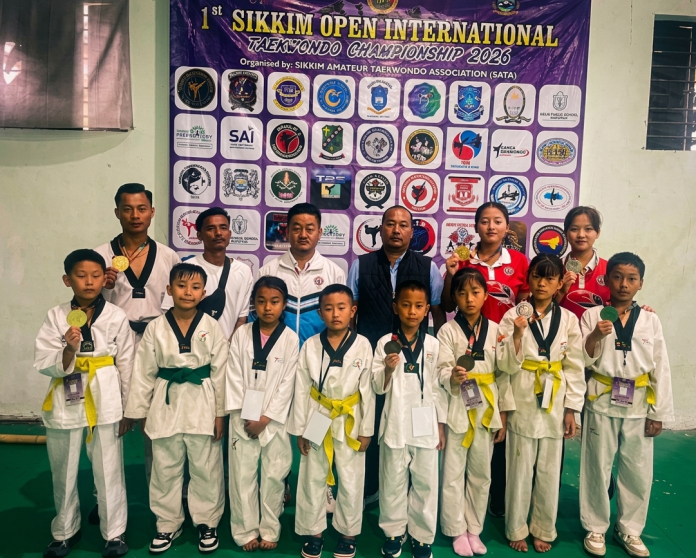
The Nagaland Taekwondo Association (NTA)registered a commendable performance at the 1st Sikkim Open International Taekwondo Championship, clinching a total of eight medals during the three-day tournament held at Palzor Stadium in Gangtok from June 6 to 8.
Represented by a 14-member contingent, Nagaland secured three gold, three silver and two bronze medals, marking a successful outing at the international-level taekwondo event.
Silver medals were bagged by Victor Tep Rengma, Rhonbeni Lotha and Alem Aier, while Solan C. Ngullie and Mhonbeni T. Humtsoe contributed two bronze medals to Nagaland’s overall haul.
The team was guided by coach Santsuthung Ngullie, with Ram Bahadur serving as the team manager throughout the championship.
The achievement highlights the growing standards of taekwondo in Nagaland and reflects the dedication of the athletes, coaches and officials who represented the state at the inaugural Sikkim Open International Taekwondo Championship.
The medal-winning performance is expected to provide further impetus to the development of taekwondo in Nagaland and encourage more young athletes to participate in competitive martial arts at national and international levels.
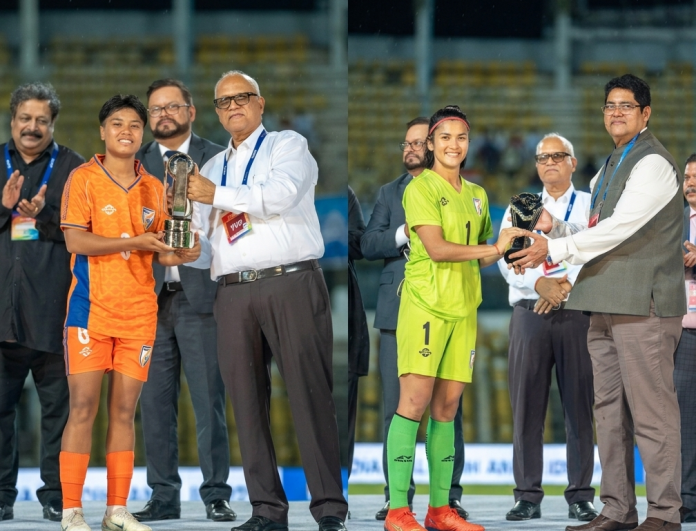
India’s triumphant return to the summit of South Asian women’s football was driven by two standout performers whose journeys embody the evolving landscape of the game in the country. Midfield star Sanfida Nongrum and veteran goalkeeper Elangbam Panthoi Chanu emerged as the defining faces of India’s successful 2026 SAFF Women’s Championship campaign, helping the Blue Tigresses end a seven-year title drought and lift a record-extending sixth regional crown.
Playing before packed crowds at the Pandit Jawaharlal Nehru Stadium in Margao, Goa, India completed a dominant tournament with a convincing 3–1 victory over Bangladesh in the final. While several players contributed to the championship run, Nongrum’s match-winning performances and Panthoi’s leadership and reliability between the posts proved decisive throughout the campaign.
Player Tournament Award Core Impact
Sanfida Nongrum Most Valuable Player (MVP) Scored decisive goals in the semi-final and final
E. Panthoi ChanuBest Goalkeeper Tournament’s most dependable defensive presence
Sanfida Nongrum: The Pride of Meghalaya
Sanfida Nongrum’s emergence as the tournament’s Most Valuable Player is a story of perseverance and determination. Raised in a modest family in Shillong, where her father worked as a driver, Sanfida’s journey to the top of Indian football has been defined by resilience, grit, and an unyielding belief in her abilities.
The 22-year-old has already etched her name into history as the first woman from Meghalaya to represent India’s senior women’s national team. Developed through local competitions and the Royal Wahingdoh Academy, Nongrum has steadily grown into one of the country’s most influential midfielders.
Her biggest contributions came when India needed them most. In the semi-final against a stubborn Bhutan side, Nongrum scored the lone goal in the 58th minute to secure a 1–0 victory and send India into the final.
She repeated her heroics against Bangladesh. With the score tied at 1–1 in the second half, Nongrum found the breakthrough goal before later setting up Lynda Kom to help seal a memorable 3–1 victory. Her ability to influence the game’s biggest moments made her the unanimous choice for the tournament’s MVP award.
Panthoi Chanu: The Safe Hands Behind India’s Success
While Nongrum provided the attacking spark, Elangbam Panthoi Chanu supplied the foundation upon which India’s title-winning campaign was built. The experienced goalkeeper was named the Best Goalkeeper of the 2026 SAFF Women’s Championship, capping another milestone in a remarkable career.
Born in Keirak village in Manipur’s Thoubal district, Panthoi’s rise has mirrored the growth of women’s football in the northeastern region. She began her football journey with the Women Football Academy Kakching before progressing through India’s domestic system and establishing herself as the country’s premier goalkeeper.
Panthoi has consistently broken barriers throughout her career. In 2024, she became the first Indian woman footballer to play in a competitive Australian league when she signed for Metro United WFC in South Australia, a landmark achievement for Indian women’s football.
Now representing East Bengal, Panthoi entered the SAFF Championship as one of India’s most experienced internationals. She also served as one of the team’s captains during the tournament, providing leadership and composure to a squad blending youth and experience.
Throughout the competition, Panthoi’s command of the penalty area, sharp reflexes, and organizational skills helped India maintain defensive stability. Her consistency earned widespread praise and ultimately the tournament’s Best Goalkeeper award, reinforcing her status as one of South Asia’s finest custodians.
The accolade adds to an impressive list of achievements that includes the AIFF Women’s Goalkeeper of the Year award and multiple league titles.
A Blueprint for the Future
The success of Nongrum and Panthoi reflects the growing depth of Indian women’s football. Nongrum represents the emergence of a fearless new generation rising through grassroots structures, while Panthoi embodies the professionalism, experience, and international ambition required to compete at higher levels.
Together, they formed the heartbeat of India’s championship-winning side—one creating decisive moments in midfield and attack, the other providing assurance at the back.
As the Blue Tigresses celebrate their sixth SAFF Women’s Championship title, the performances of Nongrum and Panthoi offer a glimpse into a promising future. One symbolizes the next generation ready to take center stage; the other stands as a trailblazer whose achievements continue to raise the standard for Indian women’s football.
For India, the 2026 SAFF Women’s Championship will be remembered not only for reclaiming the regional crown, but also for showcasing two footballers whose stories represent the past, present, and future of the women’s game.
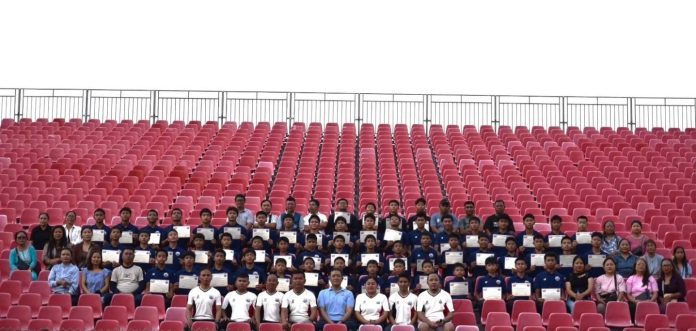
Aizawl, June 6, 2026: The Mizoram Football Association (MFA) Elite Football Academy formally concluded its 2025–26 season on Saturday with its final training session and a certificate distribution ceremony held at RG Stadium, Mualpui.
The event was attended by MFA Honorary Secretary Lalrengpuia, who encouraged the academy’s young footballers to continue striving for excellence and giving their best in their sporting pursuits. He also commended parents for their unwavering support and commitment to their children’s development.
Addressing the gathering, Hmingthansanga, Secretary of the MFA Grassroots & Youth Development Committee, urged players to recognize the value of being part of a structured elite football programme. He encouraged them to make the most of the opportunities available and remain dedicated to their growth both on and off the field.
The MFA Elite Football Academy was launched on August 16, 2025, with the aim of nurturing young football talent in the state. Led by Head Coach K. Lalrindika and supported by coaches Anand Gurung, C. Lallawmzuala, M.S. Dawngliana, Ramropuii, and Lalhmangaihsanga, the academy has conducted year-round morning training sessions designed not to interfere with the players’ academic commitments.
Currently, the academy trains 78 elite players born between 2009 and 2014 who were selected through a competitive screening process.
The academy enjoyed notable success during its inaugural season. At the Aizawl DFA U-15 Football Tournament held in December 2025, the academy fielded two teams, both of which advanced to the final. The Red Team emerged champions after defeating the Blue Team in a penalty shootout.
The academy has also made its mark at the national level, with nine of its players earning opportunities to participate in the AIFF Youth League. Several others have progressed to higher levels of football development, reflecting the effectiveness of the academy’s youth training programme.
MFA officials announced that preparations are already underway for the 2026–27 session, with further details regarding admissions and player selection to be released in the near future.
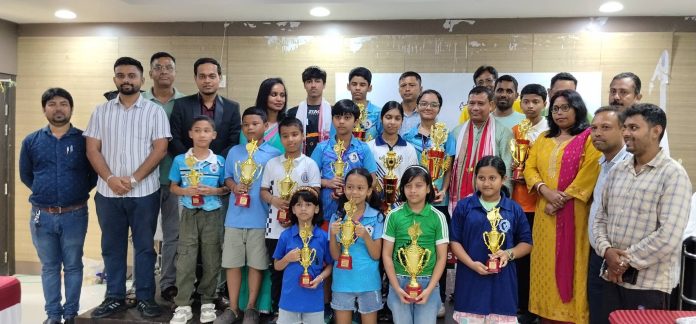
Guwahati, 8th June 2026: The 49th All Assam U-15 & U-9 Open & Girls Inter-District Chess Championship 2026 concluded successfully at the Sarusajai Sports Complex, Guwahati, from May 29 to 31, bringing together some of the state’s most promising young chess talents.
Organized under the aegis of the All Assam Chess Association (AACA), the three-day championship witnessed participation from 280 players representing 20 affiliated district chess associations across Assam. The event featured intense competition in the U-15 Open, U-15 Girls, U-9 Open, and U-9 Girls categories.
U-15 Open Winners
Harshadeep Deka of Guwahati emerged as the champion in the U-15 Open category. Bhargab Debnath of Cachar secured second place, while Bodhisatwa Bhowmik of Jorhat and Monodeep Dhar of Cachar finished third and fourth respectively.
U-15 Girls Winners
Hridika Das of Guwahati claimed the title in the U-15 Girls section. Suzein Ahmed of Darrang secured second position, followed by Mailin Baruah of Jorhat and Mugdha Keot of Sonitpur in third and fourth places.
U-9 Open Winners
Harshwardhan Hazarika of Dibrugarh won the U-9 Open category. Dhruvam Sarma of Morigaon secured second place, while Reyaan Nobis of Guwahati and Chow Rudraanshu Pran Gogoi of Charaideo finished third and fourth respectively.
U-9 Girls Winners
Adrija Kalita of Sonitpur emerged victorious in the U-9 Girls category. Sanvi Kashyap of Guwahati secured second position, followed by Troyee Roy of Cachar and Pritisha Kashyap of Nalbari in third and fourth places respectively.
The prize distribution ceremony was attended by India’s Junior No. 1 Table Tennis player Priyanuj Bhattacharyya, Tarali Das, Joint Director of the Directorate of Sports & Youth Welfare, Assam, Mukuta Deka, President of the All Assam Chess Association, Nandan Buragohain, Joint Secretary of AACA, Lakhya Jyoti Saikia, Chief Arbiter of the championship, and Arindam Baruah, Secretary of the Kamrup District Chess Association.
The championship also served as a selection event for the upcoming National Chess Championships. The selected players will represent Assam at the national level, carrying forward the state’s growing reputation in youth chess.
The All Assam Chess Association congratulated all winners, participants, parents, coaches, arbiters, officials, and district associations for contributing to the successful organization of the championship and reaffirmed its commitment to promoting chess development across Assam.